Operatory 2 was booked for a two-hour crown prep at 9:00. At 9:20 the patient has not arrived and is not answering. The hygienist is at lunch early and the doctor is reading the paper.
That is one no-show. The question is how many you have, what they cost, and what to change.
What is the formula?
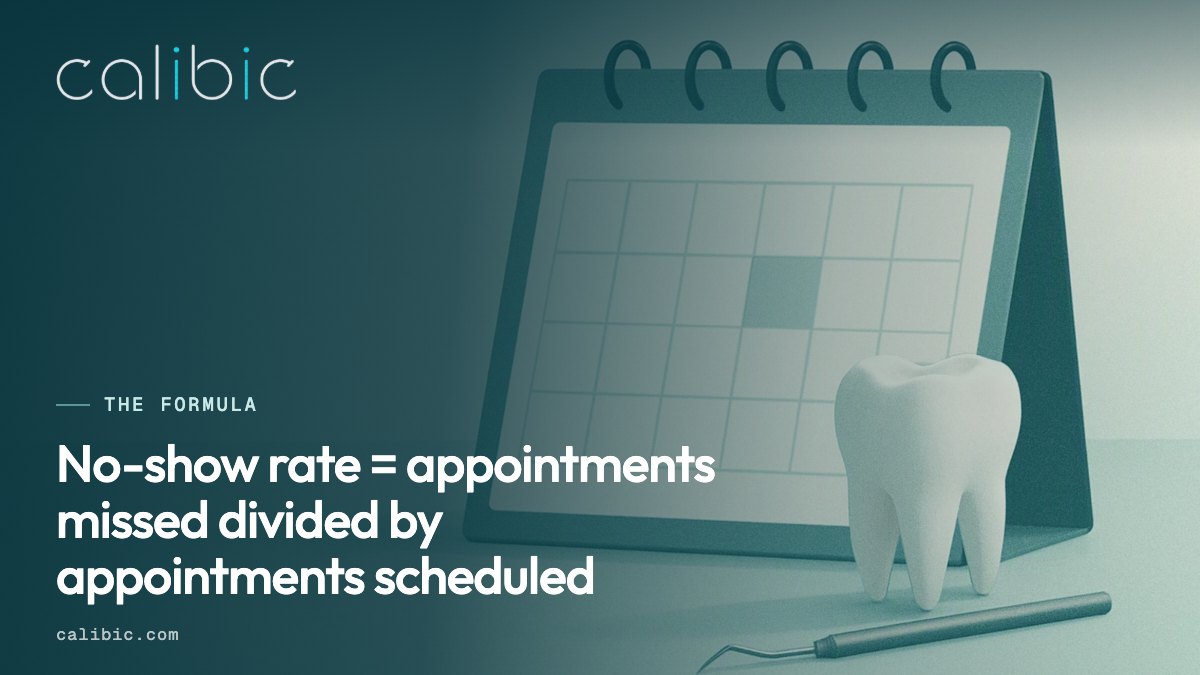
No-show rate = appointments missed divided by appointments scheduled, over the same period.
Decide what “missed” means before you count. The usual choice: the patient did not arrive and did not cancel at least 24 hours ahead. Late cancellations go in the same bucket because the slot was just as empty.
A worked example. In September the practice scheduled 920 appointments. 64 were no-shows and 19 were cancelled inside 24 hours. Missed = 83. No-show rate = 83 divided by 920 = 0.09, or 9.0%.
We do not publish an average. Published figures for dental no-shows vary widely and most do not state their definition or their year, so a comparison would mislead. Measure your own and watch the trend.
Where do the inputs live?
- Open Dental. Appointment status Broken, plus the appointment history in
histappointment, which records each status change with the user and time. The Broken Appointments report under Reports lists them by date. - Dentrix. Appointments marked as Broken in the Appointment Book;
admin.appthistkeeps every status change withuserid,modifieddateandmodifiedtime. The Appointment Book’s broken appointment list, or the Practice Advisor summary, gives totals. - Eaglesoft.
appointment.arrival_statusand the walkout time columns show which appointments were never arrived. The Missed Appointments report under Reports lists them.
What does it cost?
Cost of no-shows per year = missed appointments per year multiplied by average production per appointment, minus whatever was filled from a short-call list.
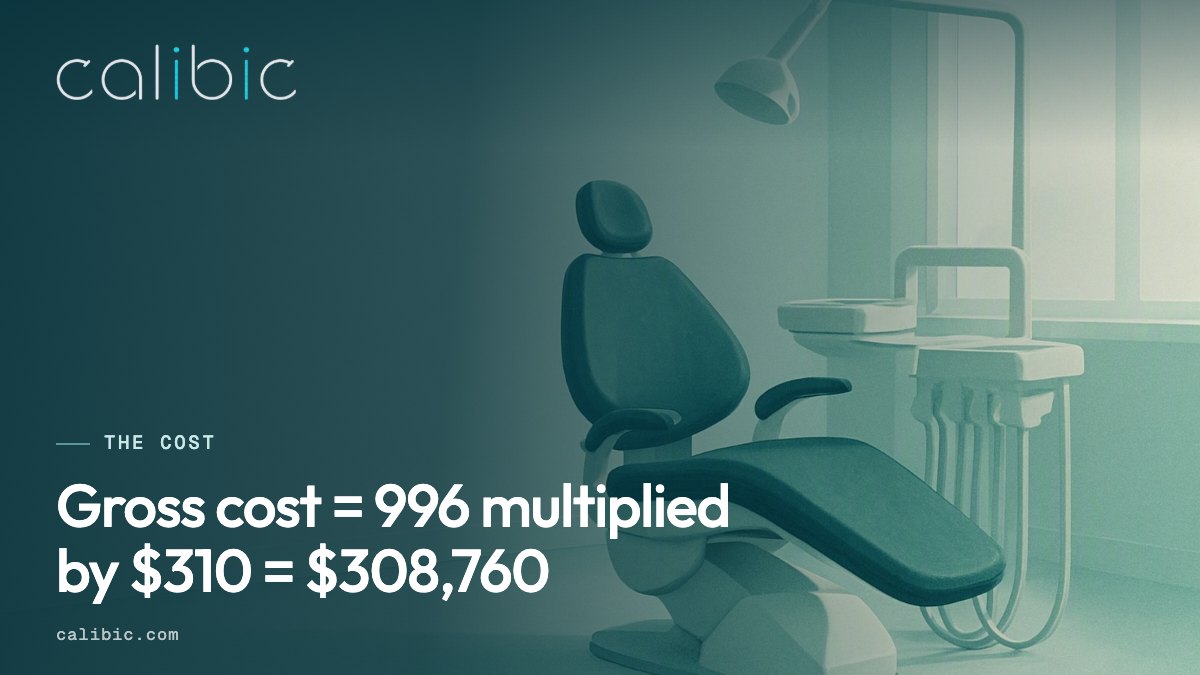
Continuing the example: 83 missed a month is 996 a year. Average scheduled production per appointment is $310. Gross cost = 996 multiplied by $310 = $308,760. If the team fills one slot in four from the short-call list, the net cost is 75% of that, or $231,570. Work the same sums below with your own numbers.
Run the same calculation for hygiene and doctor columns separately. A hygiene no-show costs one $240 slot. A doctor no-show on a two-hour crown prep costs the whole morning’s production and the lab slot that was already booked. The same 9% rate means very different money depending on which column it lands in, and the fix for each is different: hygiene needs a short-call list, the doctor’s column needs a deposit or a confirmation call from the coordinator.
What reduces it?
- Confirm twice, by the channel the patient answers. Two days before and the morning of. Record the confirmation in the appointment, so the morning huddle can see who is unconfirmed.
- Shorten the lead time. Appointments booked six months out fail more often than appointments booked two weeks out. For big treatment, offer the first open slot, not the one that suits the schedule best.
- Keep a short-call list that is real. Patients who said “call me if anything opens up”, with the procedure, the length and a phone number that answers.
- Call the same day. A no-show rebooked at 9:30 is a schedule problem. A no-show rebooked next month is a recall problem, and the recall page shows how those pile up.
- Collect a deposit for long appointments if your state and your patient base allow it. Say so at booking, not at the door.
What Calibic adds
The Daily Huddle is LIVE. Each morning it lists today’s patients with what each one needs: unconfirmed, balance due, treatment planned and not booked. Calibic reads appointment status and history from Open Dental, Dentrix and Eaglesoft (read-only, it never changes a record) and shows the no-show rate by provider and by day of week on the dashboards. It does not text or call patients today; that is coming, and until then the confirmation calls stay with your team.
Next step: the full no-show cost calculator adds hygiene and doctor appointments separately.