
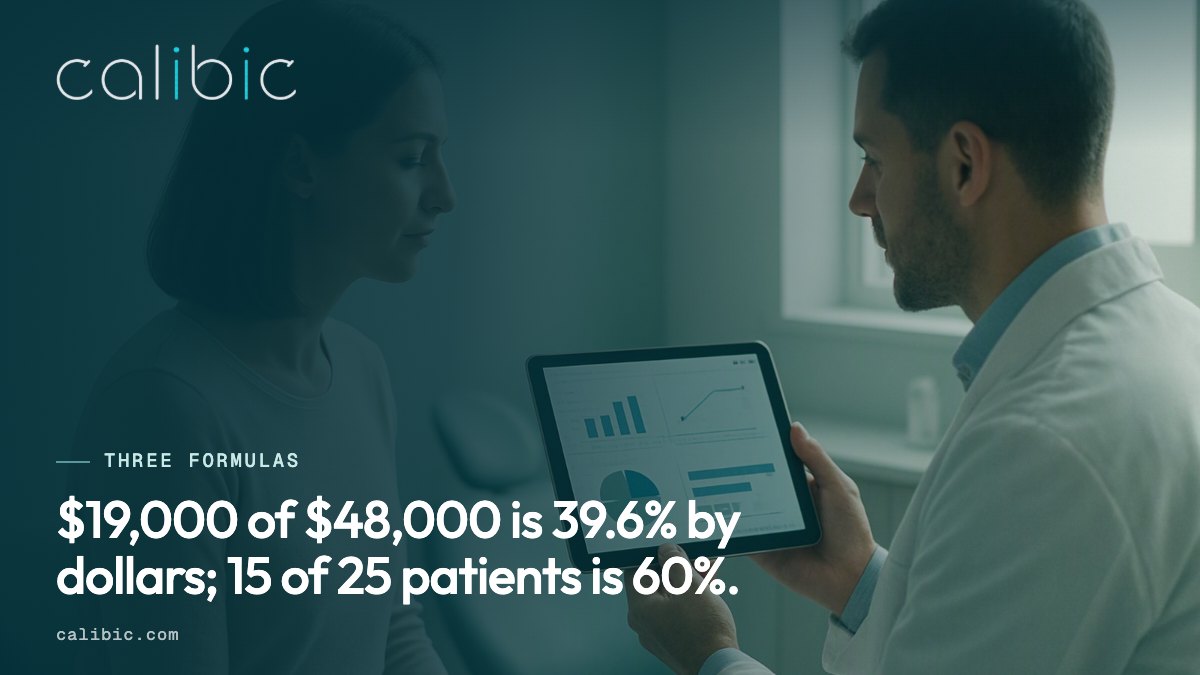
Dr. Ellery presented $48,000 of treatment last month. $19,000 of it is scheduled or done. Is the acceptance rate 40%? Or is it 60%, because 15 of the 25 patients booked something? Both are true. Pick the one that answers the question you are asking.
What are the three formulas?
By dollars. Accepted dollars divided by presented dollars.
$19,000 divided by $48,000 = 0.396, or 39.6%. This is the financial view. It is dragged down by one large implant case that was declined.
By patient. Patients who accepted at least one planned procedure divided by patients presented with a plan.
15 divided by 25 = 0.60, or 60%. This is the conversation view. It tells you whether the presentation is landing, regardless of plan size.
By procedure. Procedures scheduled or completed divided by procedures planned.
Say 61 procedures planned, 38 scheduled or completed. 38 divided by 61 = 0.623, or 62.3%. Useful by provider and by procedure type: if crowns are accepted at 70% and periodontal therapy at 30%, the fix is in how perio is explained, not in the fee.
What counts as accepted?
Decide and write it down. The honest definition is scheduled or completed within 30 days of the presentation date. “The patient said yes” without an appointment is not acceptance; it is the start of the unscheduled treatment list. Keep found and recovered separate here too: a plan is accepted when booked, and the money is recovered only when the practice software shows it completed and paid.
Where do the inputs live?
- Open Dental. Treatment planned procedures carry a date in
procedurelog; completed ones change status. Reports, Treatment Finder gives the presented side; production reports give the completed side. - Dentrix. The Treatment Planner’s case status (Proposed, Accepted, Rejected) and the Unscheduled Treatment Plans report in Office Manager. Practice Advisor reports a treatment acceptance figure if cases are being marked.
- Eaglesoft. Proposed treatment in the chart, with the unscheduled treatment report under Reports for the presented side and service rows (type S in
transactions_header) for the completed side.
The biggest data problem is plans that were never presented. If the doctor charts a crown but nobody discussed it, it inflates the denominator. Mark presented plans as presented, every time.
What is a good rate?
We do not publish a benchmark. Figures circulate from consultants and software vendors, but they rarely state the formula, the period or the year, and the three formulas above can differ by 20 points on the same month. Calculate yours by provider for three months and compare month over month. A rising by-patient rate with a flat by-dollar rate means more people say yes to small things; look at how large cases are presented.
Why track it by provider?
Because the practice figure hides the spread. A practice at 55% by patient might be one doctor at 70% and an associate at 38%. Those two need different conversations. The 70% doctor may be presenting small plans only; the 38% associate may be diagnosing well and handing the cost conversation to a front desk that is also answering the phone. Run the three formulas per provider for three months before drawing any conclusion, because a single large case accepted or declined swings the dollar figure for a month.
What moves the rate?
- Same-day presentation with a number. A plan presented with the insurance estimate and the patient’s share, on the day of the exam, before the patient reaches the front desk.
- Book before they leave. The first appointment, even if it is six weeks out. The unscheduled treatment page is what happens when this step is skipped.
- A seven-day follow-up on every unbooked plan. One call, with the tooth named and two times offered.
- Financial options ready at the desk. Phased treatment, a payment plan, a third-party finance option, with the forms already printed.
- Measure by provider and share it. Acceptance is a skill. It improves when the number is visible.
What Calibic adds
The treatment view is LIVE. Calibic reads treatment plans, appointments and the ledger from Open Dental, Dentrix and Eaglesoft (read-only, it never changes a record) and shows acceptance by dollars, by patient and by provider, with the unbooked plans ranked beneath it. Found and recovered are separate figures, and recovered is counted only when the practice software shows the treatment booked, completed and paid.
Next step: put your own month into the case acceptance calculator.